Get started with content marketing on Google Bing and Yahoo Search Engines
- Get link
- X
- Other Apps
Get started with content marketing
Key learnings
With so many businesses and brands online, content marketing is a valuable tool in helping you to stand out. In this lesson, we'll explore:
- what content marketing is, and why it can add value to an online business
- best practices for creating your own content marketing strategy.
When it comes to producing great content, it’s useful to try and define your values with regards to the content you're going to create. A simple way to do this is to generate a content mission statement. Complete the following: As a [insert business or brand description, e.g. ‘A local pet shop] we aim to provide [insert service, e.g. 'top quality dog training toys and equipment] with [insert what makes you special, e.g. 'with expert knowledge'] with a view to [insert the desired outcome for your customers, e.g. 'to foster confidence in new pet owners'] Following this, your content mission statement could be something like: "As a local pet shop, we aim to provide expert content and quality dog training gear so that you can be the best pet owner you can be."
Additional Links
- Content Marketing Institute
- Content Marketing Ideas
Key learnings
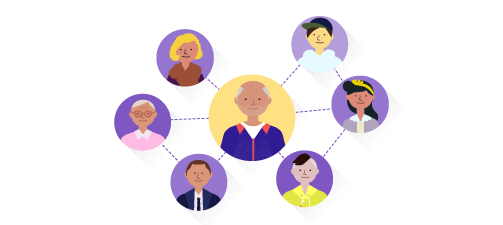
Making sure you are saying the right thing, to the right people, and are connecting with them at the right time is critical when it comes to content marketing. In this lesson, we'll explore:
- what audience segmentation is and how it can benefit a business
- how to use audience segmentation to boost your content marketing efforts
- some of the tools and systems available to help you segment your audience correctly.
Use the tools mentioned in this lesson to start making profiles of your target audience. Give each one a name, and then note jobs and other characteristics, such as: Who do they follow on Twitter? Which newspaper do they read? What TV shows do they watch? This will help inform your content marketing strategy and allow you to make sure the content you create is aimed specifically at one of your audience profiles.
Additional Links
- Google Keyword Planner
- Bing Keyword Research
- YouGov Profiles
- Answer the Public
Key learnings
Content is much more than just text on a screen. From entertaining GIFs to blog posts, whitepapers, and full-length videos, understanding which content format can make the most impact on your audience is critical. In this lesson, we'll explore:
- popular online content formats
- the four main purposes for content marketing
- how to match different formats to your content goals
If the aim is to engage with both existing customers and new customers, then a competition is a great way to grab people's attention and engage them with the brand.
Key learnings
When it comes to writing for the web, there are key considerations to keep in mind which will help make online reading as enjoyable as possible. In this lesson, we'll explore:
- how online audiences and offline audiences differ in their the way they read content
- why it's important to adapt your writing style to an online audience
- tools and systems to help support writing copy for the web.
Next steps
When writing for an online reader, it's crucial to keep in mind who you are writing for and to tailor your writing style based on the audience's needs. Try this writing exercise to hone your skills: Come up with a concept for a blog article. Think about writing on a topic you know will resonate with your readers — for example, if you're selling baking supplies, perhaps you could write about different meringue techniques. Before you start writing, consider two distinct audience profiles. Come up with characteristics for both audience profiles and detail the following:
Their age
Their job roles
What interests they have
What matters to them
How much they already know on the subject
Now, draft two different versions of the same blog article for the different audience types. Do you alter your tone, depending on whether your audience is made up of professional patisserie chefs or amateur bakers? Does the language you use change, based on the audience's existing knowledge level of baking terminology?
Additional Links
- Copy Blogger
- Grammarly
Key learnings
Once you've created content, knowing how to distribute and promote it online is key to getting the reaction that you want. In this lesson, we'll explore:
- the channels available to promote and distribute content effectively
- how a content calendar can help you organize your content marketing activities
- best practices that ensure your content gets the attention it deserves.
Next steps
Next time you create a piece of content, try distributing the same piece via different channels. For example, create a blog on your website and promote it via different social media platforms at different times of the day. Record your findings to help inform your content marketing strategy moving forward. Different audiences use different platforms, at different times of the day. See what works for your audience.
Additional Links
Key learnings
Knowing how well your content performs once it's published online will help you understand your audience, as well as provide you with insights as to how to improve campaigns in the future. In this lesson, we'll explore:
- the tools available to help track the success of your published content
- key metrics used to measure the success of content marketing campaigns
- how to use data gathered to better meet goals in future campaigns
Next steps
Open the analytics feature within one of your social media platforms. Explore which posts were most successful by looking at metrics such as:
Views
Engagement (Likes or Comments)
Shares
Next, use this data to extract some top-level insights that will help improve the quality of what you are doing going forward. Which posts performed the best this month? Analyse these to work out why this might be the case.
marketing
- Question 1Which of the following is an accurate definition of what a content marketing campaign involves?That's correct. Content marketing is a strategic marketing approach. By sharing valuable and relevant content on a regular basis, you are aiming to attract and retain your audience and drive profitable customer actions.ACreating and posting content ad-hoc when you have the timeBThe creation of time-sensitive content that can be published through various channelsCRegularly emailing customers with news about a business’s products or servicesThe creation and promotion of online materials with the goal of increasing interest in a product or serviceQuestion 2What does the following definition describe? 'The division of an audience into groups of who they are and what they like, with a goal of identifying a group most interested in your product/service.'That's correct. Businesses would struggle if targeting an entire mass market. Segmenting your audience gives you the opportunity to better match the customer's needs and only target those interested, resulting in better opportunities for growth.AMarketing channelsBDemographicsAudience segmentationDGroup dynamicsQuestion 3Fill in the blank: When describing the purpose of content, what is missing? 'To entertain, to inspire, to _______ and to convince'.That's right. When creating content you should aim to achieve specific business goals. The four main purposes of content are usually: to entertain your audience, inspire their actions, educate them further and convince them to complete an action.AHumourBPleaseCSurpriseEducateQuestion 4Which of the following best describes why approaches to writing need to be adapted for online content?Well done, that's correct. There are so many websites and so much content out there, so it is crucial that yours stands out amongst the rest. One way to ensure it does is to adapt offline writing styles to online behaviour, whilst keeping in mind that users have varying attention spans.Online readers have a reduced attention span, due to being flooded with informationBCertain blogging platforms have a limit on the word count you can publishCOnline readers only like to engage with long-form pieces of contentDOnline audiences are typically younger, so the language used needs to reflect thisQuestion 5What are 'highlighting key dates' and 'considering multiple channels' best practices of?That's right. A content calendar can be used to plan and organise the process of creating content for key dates: from brainstorming ideas through to writing and publishing across multiple platforms.Creating a content calendarBDesigning illustrations to support contentCSegmenting your audienceDIdentifying social media influencersQuestion 6Which of the following metrics could help you understand which blog post is resonating the most with your audience?That's right, nice work. Session duration will show you how long your audience spends on that specific blog page. This gives you a good indication of whether they've found the blog content relevant to them.Session durationBPage viewsCReferral trafficDUnique page views
- Get link
- X
- Other Apps
Comments
Post a Comment